
Sex Offender Checks in Bonneville County
The Idaho State Police Bureau of Criminal Identification operates the statewide public registry under Title 18, chapter 83. A Bonneville County search can begin with a person's name, a county list, a city, a ZIP code, or an address-radius map. Name and county modes are important because a map is only a supplemental view. The search controls also separate the adult and juvenile databases, so the selected radio button changes which set of public records is queried.
The sheriff shown as the verification agency on a profile is the correct local contact for a suspected factual error. Bonneville County Sheriff's Office receives and verifies local registration information that it handles, while ISP publishes the lawful public fields. Do not contact or confront a listed person to resolve a discrepancy. A search result is a lead for careful comparison, and only fingerprints can establish positive identity.
Bonneville Registry Search Screen
The official ISP registry source presents separate paths for a name, city, county, ZIP, or map search. Name results display 15 entries per page, as do the city, county, and ZIP modes. Review every result page rather than treating the first screen as the full return.
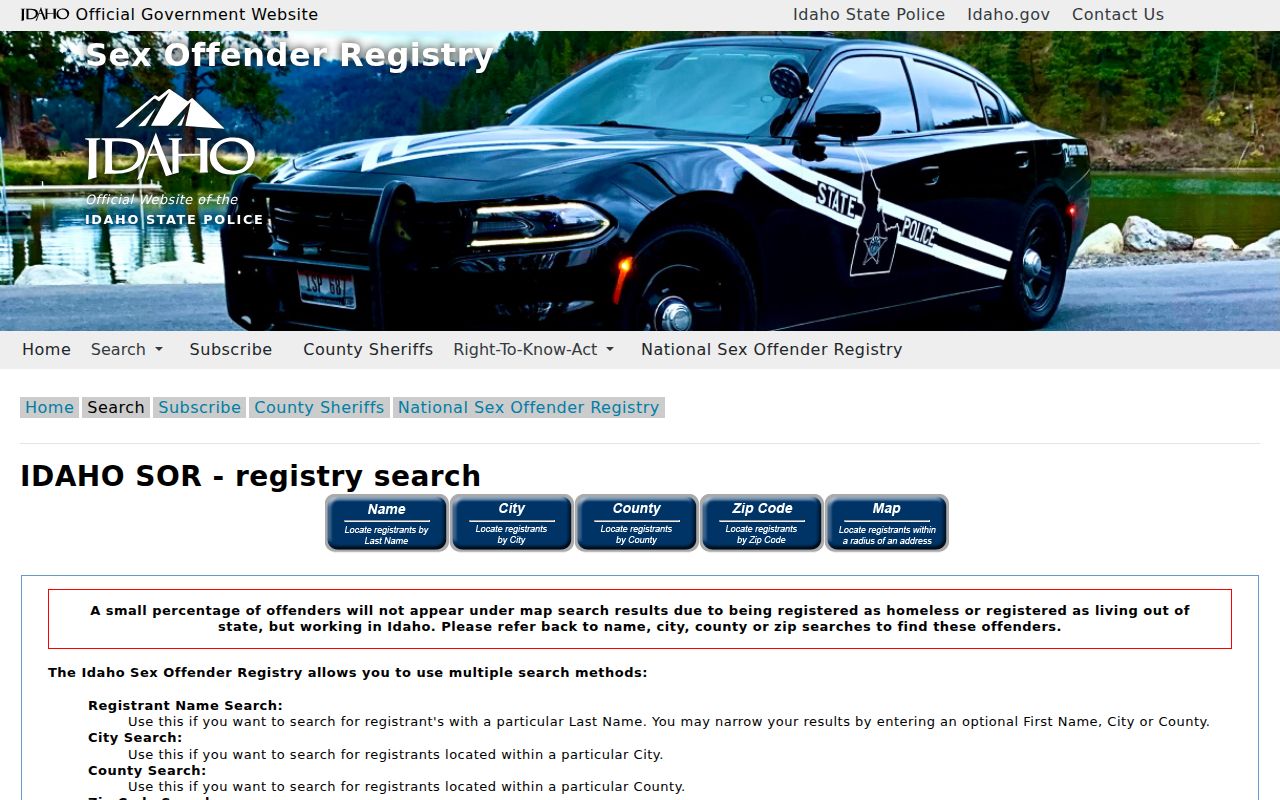
Start with county or name mode, then use the map as a second view. A county result can reveal a public listing that the address map does not plot.
How to Search the Idaho Central Sex Offender Registry
Open the Idaho Central Sex Offender Registry search and choose the mode that fits the known facts. A county search gives a broad Bonneville list, while a name search is useful when a particular person is known. City and ZIP searches narrow by place. Map and subscription tools accept an address and a one, three, or five-mile radius, but they serve different purposes: the map is a current visual search, while subscription sends later movement alerts.
- Open the registry and review its identity and lawful-use warnings.
- Search by name or select Bonneville County, city, or ZIP.
- Review all result pages and compare aliases and physical facts with care.
- Open the profile, note the verification sheriff, and use map results only as a supplement.
| Field Label | Type | Required | Notes |
|---|---|---|---|
| Last Name | Text | Yes for name mode | Core name field |
| First Name | Text | No | Narrows a surname |
| City or ZIP | Select | Yes for that mode | Use the matching search tab |
| County | Select | Yes for county mode | Select Bonneville |
| Radius map | Address and map | Yes for map mode | 1, 3, or 5 miles |
| Adult / Juvenile | Radio | Yes | Selects the database searched |
Bonneville County Address Alerts
The ISP subscription form collects a street address, city, ZIP code, email address, email confirmation, and a one, three, or five-mile radius. Alerts report when a registrant moves into or out of the selected area. This is useful for ongoing community awareness, but it does not convert the radius into a complete county list.
Some people who are homeless or who work in Idaho while living elsewhere may not appear on the map. Pair the alert with a county search and check the adult or juvenile database choice. That combination reduces the risk of treating a geographic display as proof that no other public record exists.
Inside a Registry Profile
A public profile may show name, aliases, photograph, birth or age information, sex, race, height, weight, hair and eye color, scars or tattoos, residential address status, compliance, verification sheriff, qualifying offense, conviction jurisdiction and date, and some employment, school, or vehicle facts. Those fields help distinguish people with similar names, but an alphanumeric identifier or visual resemblance is not positive identification. Idaho withholds Social Security and driver's-license numbers, telephone numbers, online identifiers, and additional law-enforcement-only information.
Read status and offense fields independently. A published address describes what the registry reports; it does not guarantee that the map includes every person connected to the area. The offense line identifies the qualifying conviction and jurisdiction, while the verification-sheriff line identifies the office responsible for checking the registration facts. Report a possible error to that sheriff and preserve the profile details needed to locate the record.
| Name and aliases | Public identity names |
|---|---|
| Photo and description | Visible identifying traits, not fingerprint proof |
| Registered address | Published address and address status |
| Offense and statute | Qualifying offense, jurisdiction, and conviction date |
| Designation | Registrant or court-designated Violent Sexual Predator |
| Registration status | Compliance and verification agency information |
Bonneville Cross-State Registry Searches
When a personal or family safety search extends beyond Idaho, use the official National Sex Offender Public Website. NSOPW queries participating jurisdictions through a national interface, which is useful when a person has lived or been convicted outside Idaho.
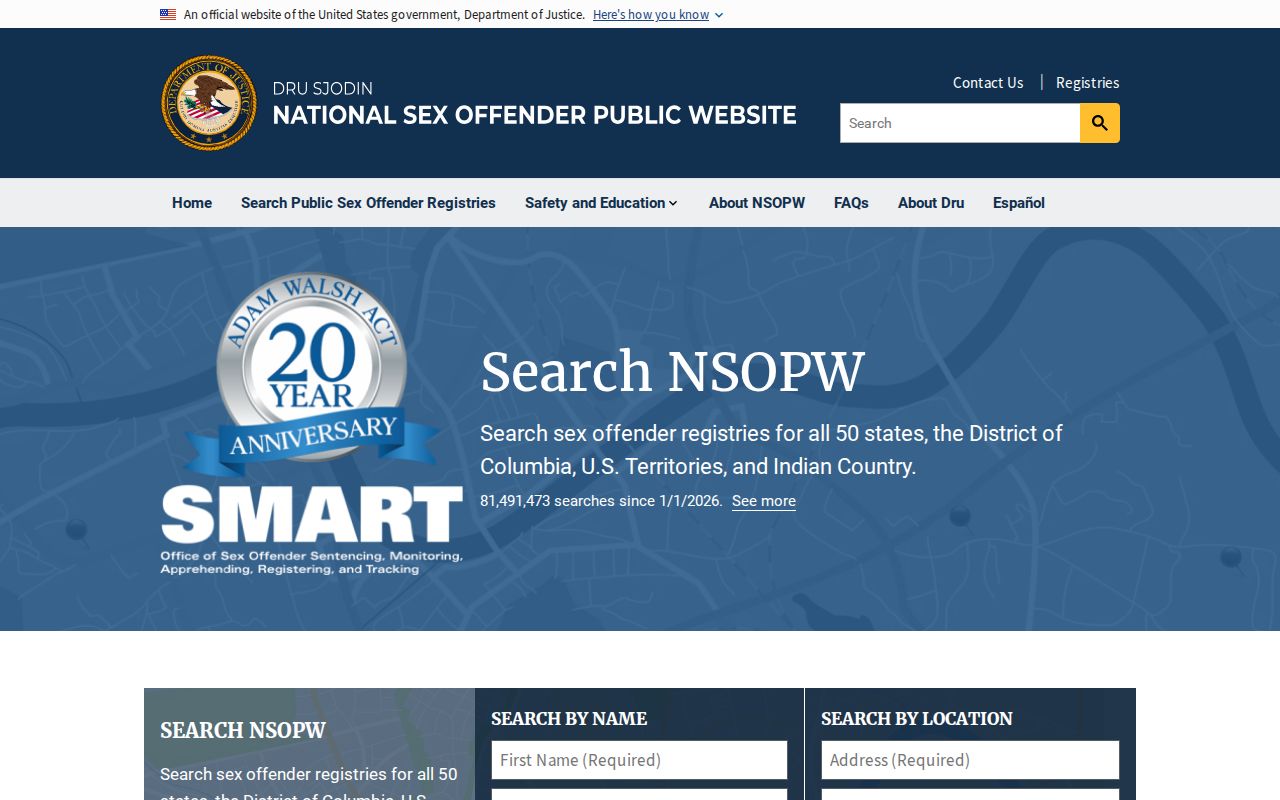
NSOPW is the cross-state layer, not a replacement for the Idaho profile. Return to the Idaho registry for the state's public fields and the named verification sheriff.
Idaho Registration Levels and Requirements
Idaho does not publish the registry as a federal Tier I, Tier II, and Tier III system. State law distinguishes registrants from people designated Violent Sexual Predators, often shortened to VSP. Registration is generally lifetime under Idaho Code sections 18-8307 and 18-8310, with limited petition mechanisms defined by statute. The actual duty for a named person must be verified from Idaho law and the responsible agency rather than inferred from federal SORNA labels.
A VSP designation is not simply a website severity score. It is a distinct Idaho legal designation with enhanced requirements. Likewise, the phrase public registrant does not create a fixed public tier. The table describes the categories supported by the research without inventing a universal check-in interval. Anyone seeking a person-specific schedule or possible petition route should use the official record and current statute.
| Level / Tier | Duration | Verification Frequency |
|---|---|---|
| Public registrant | Generally lifetime, with limited petition routes | As Idaho law and agency schedule require |
| Violent Sexual Predator | Lifetime designation under Idaho law | Enhanced requirements under state law |
Bonneville Verification and Supervision
A profile's verification sheriff is the official contact for a suspected factual error. ISP registry staff can be reached at 208-884-7305 or idsor@isp.idaho.gov for statewide registry questions. Report suspected noncompliance to law enforcement and do not confront the person. Only a fingerprint comparison can positively establish identity when names or visible features are similar.
The Idaho Commission of Pardons and Parole represents a separate supervision layer.
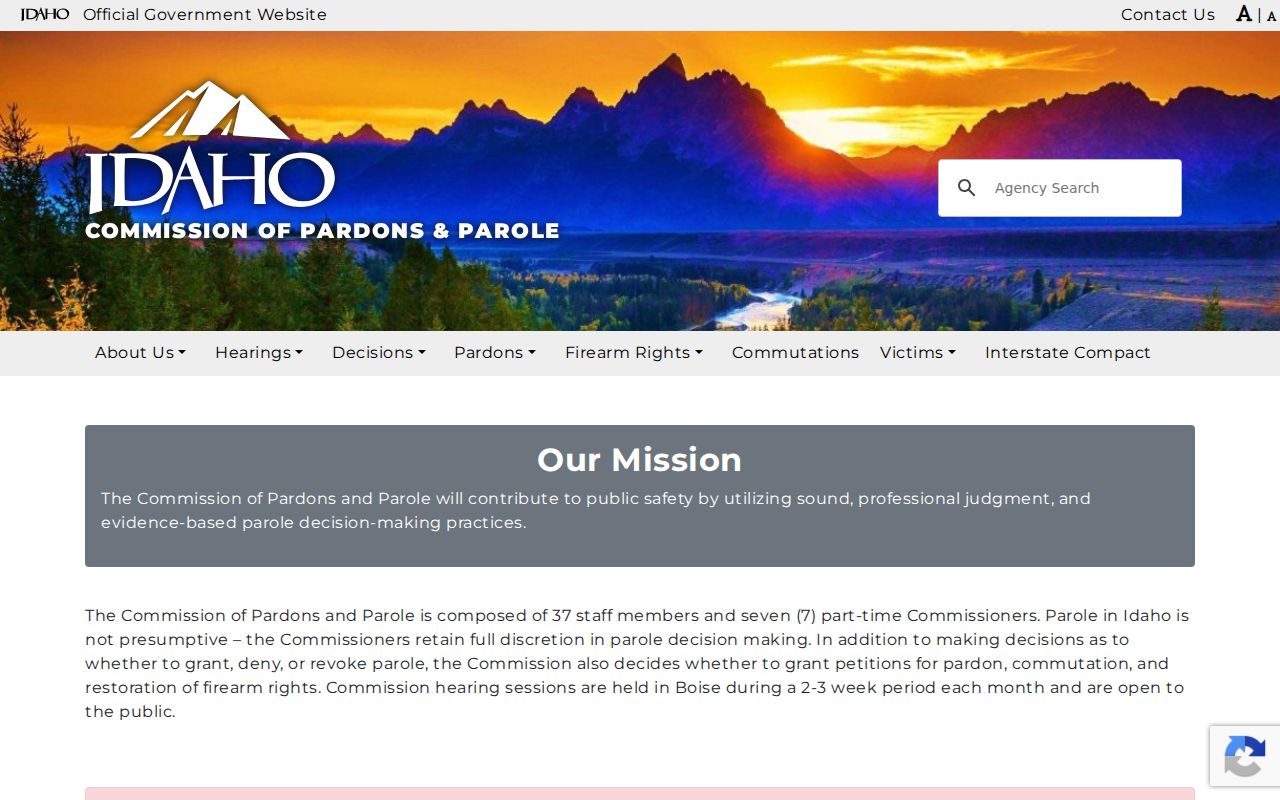
Parole status and registry duty are distinct legal records. A person can have a registry obligation without current parole, and a registry profile should not be read as proof of a present supervision status.
How Bonneville Registry Data Reaches ISP
County sheriffs, the Idaho Department of Correction, and Juvenile Justice send required registration information into the state system. ISP publishes only the fields authorized for public access. Bonneville County verification work helps keep local address and compliance information current. This chain explains why a correction belongs with the verification sheriff shown on the profile rather than a private search service.
Idaho registry history began in 1993, and the current notification act took effect in 1998. The system and a person's public status can change after an old list is saved. Use the live official profile, note its verification office, and avoid copying stale data into a new conclusion.
Community Notification and Lawful Use
Registry data supports personal, family, and neighborhood safety planning. It does not authorize confrontation, discrimination, or harassment. Address subscriptions send email when a registrant moves into or out of the chosen radius, but they do not promise notice of every historical registration or every person connected to Bonneville County. Idaho Code section 74-120 also restricts using public records as telephone or mailing lists.
Use the information to understand an official public record and choose lawful safety steps. When a profile appears wrong, contact the verification sheriff. When conduct suggests an immediate threat or possible noncompliance, contact law enforcement. Do not publish accusations based only on a similar name, an old screenshot, or a map pin.
Misuse is unlawful: Idaho Code § 18-8326 imposes criminal and civil consequences for using registry information to injure, harass, or pursue an unlawful purpose.